Superior Plumbing & Heating
Order a plumber (866) 932-2818
book now
It smells like a sewer; the woman covers her nose

Why Trenchless Sewer Line Repair Is the Smartest Way to Fix Underground Pipes

So you’ve called a plumber, and they’ve run a camera through your pipes and confirmed what you feared: there’s a real crack, a root intrusion, or a collapsed pipe section somewhere deep underground. The next thing you hear is: “We’re going to need to dig.”

FIX IT WITHOUT DIGGING

But wait. You probably don’t need any of that.

There’s another solution called trenchless sewer repair, and it’s something you should think about in the first place, especially if you want to get rid of sewer smells in your home without digging up your yard.

Two Main Methods of Trenchless Sewer Repair — And How They Work

Basically, there are two primary trenchless techniques, and which one is right for you depends on the condition and location of your pipes

  • Pipe Lining (Cured-in-Place Pipe, or CIPP)

    Pipe Lining (Cured-in-Place Pipe, or CIPP)

    Think of this like installing a pipe inside your existing pipe.
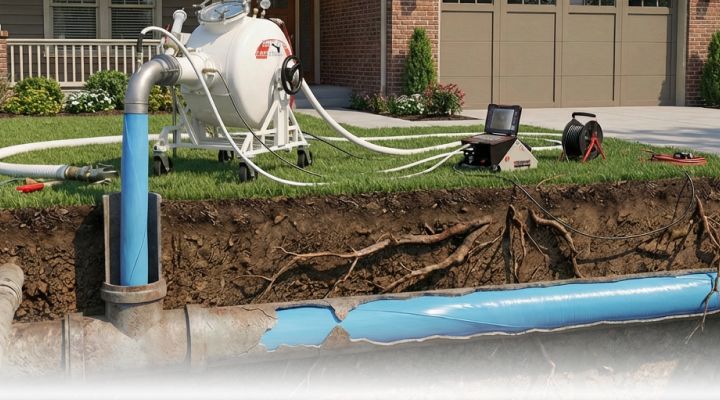
    A plumber inserts a flexible, resin-saturated liner into the damaged pipe through a small access point (often an existing cleanout or a single small excavation). The liner is then inflated and pressed against the interior walls of the pipe, where it’s hardened using hot water, steam, or UV light. Once set, it forms a smooth, jointless, seamless “pipe within a pipe.”

    What it fixes:

    Cracks, fractures, small root growth, rust, tiny gaps at pipe joints, and surfaces inside pipes that are prone to biofilm buildup.

    What makes it impressive:

    The new lining is actually way stronger than the original pipe material. To give you a perspective: a properly installed CIPP liner can last 50 years or more.
    What it requires:

    Your original pipe needs to be mostly intact. If there are major offsets or if the pipe has collapsed, just lining it may not be enough.


  • Pipe Bursting

    Pipe Bursting

    This method is used when the existing pipe is too damaged to be relined.

    A plumber pulls a hydraulic bursting head through the old pipe, shattering it outward into the surrounding soil as it goes. At the same time, they pull a brand-new HDPE (high-density polyethylene) pipe behind it, replacing the old line entirely.

    What it fixes:

    Pipes that have completely failed or are severely damaged, or if you want to upgrade to a larger-diameter pipe while making these repairs.

    What makes:

    it impressive: You get a completely new pipe, not a repaired one. HDPE pipes are incredibly durable, highly resistant to root intrusion, and have a smooth interior that discourages biofilm buildup (remember the hydrogen sulfide gas we talked about here? A smooth, seamless pipe makes that far less likely to return).

    What it requires:

    There must be enough surrounding soil space for the old pipe to burst outward. In some tight urban settings or near other utilities, this method may not be feasible.

Trenchless Sewer Repair Explained in 4 Steps

Here’s what the process looks like, from start to finish, in just four simple steps.

  • Step #1 — Inspection

    A plumber runs a high-resolution drain camera through the affected sewer line. This reveals the exact location, depth, length, and nature of the damage. You’ll often be shown the footage directly so you understand what’s happening in your own pipes.

    Hidden-cracks-in-vent-pipes-img
  • Step #2 — Assessment & Quote

    Based on the camera footage, your plumber determines which trenchless method is appropriate. You receive a detailed quote that outlines the scope of work, the method being used, and the expected outcome.

     Blocked-vent-stacks-img
  • Step #3 — Repair

    Your plumber locates the access points. For CIPP lining, they clean the pipe, then insert and cure a resin-saturated liner to form a new pipe inside the old one. While, for pipe bursting, a bursting head breaks the old pipe while pulling a new one into place. Once the repair is finished, the access points are closed.

    odour-in-the-basement-img
  • Step #4 — Post-repair camera inspection.

    The plumber uses a CCTV camera to inspect and confirm that the repair is complete, the new lining or pipe is fitted correctly, and the flow is back to normal.

    buildup-inside-the-pipes-img
Rate this post:
Average rating: 5/5
Total votes: 1
Share:
Book Now