
maple-leaf

Choose your city

  • Toronto
  • Ottawa
  • Hamilton
  • Mississauga
  • Brampton
  • Barrie
  • Kingston
  • Windsor
  • Scarborough
  • Etobicoke
  • Oakville
  • Burlington
  • Chatham
  • North York
  • London
  • Guelph
  • Kitchener
  • Cambridge
    See all cities
    Superior Plumbing & Heating
    Order a specialist (866) 932-2818
    book now
    Well pump

    What is a Well Pump & How It Actually Works

    Did you know that about 4 million Canadians, or roughly 11% of the population, rely on private wells for their household water and depend on well pumps to supply it?

    Book a Well Pump Service

    Jul 6, 2026
    0.0
    (0 votes)
    6 minutes read

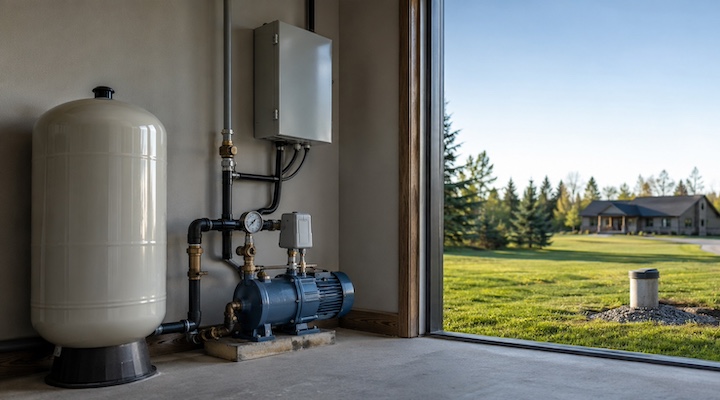
    A well pump moves groundwater from the well into the home, ensuring steady water pressure at every faucet, shower, appliance, and outdoor tap. Whether the well is 15 or 150 metres deep, the pump works together with the pressure tank, pressure switch, and other components to ensure water is available whenever you need it.

    If you’ve ever been curious about how a well pump works, the different types of pumps, or how water travels from underground to your kitchen sink, let’s figure it all out!

    Two Main Types of Well Pumps

    Most residential water pumps for houses in Canada fall into 2 main categories: submersible pumps and jet pumps. Each is specifically engineered for different well depths, water supply needs, and regional climate conditions.

    Submersible Well Pumps

    A submersible water well pump is installed deep underground, completely below the water level inside the well casing. Instead of pulling water from above, it uses a stack of spinning impellers to actively push the water upward through the drop pipe and into your home’s plumbing system. Because the entire pump and motor assembly are completely submerged, the unit operates almost silently and remains safely protected from freezing temperatures beneath the frost line.

    ProsCons
    Highly efficient, especially for deep wellsHigher purchase and installation cost
    Quiet because it operates underwaterRepairs require pulling the pump out of the well
    Protected from freezing below the frost lineSpecialized equipment is often needed for repairs
    Provides strong, consistent water pressureSand and sediment can shorten pump life over time

    Jet Pumps

    A jet well pump is installed above ground, usually inside a home or pump house. It uses suction to draw water from the well and deliver it to the pressure tank. Since the motor stays above ground, jet pumps are easier to service than submersible pumps.There are two types of jet pumps:

    • Single-drop (shallow well) jet pumps are designed for wells up to 7.5 metres deep. They use a single suction pipe and must be primed during installation and any time the system loses pressure.
    • Double-drop (deep well) jet pumps are designed for wells up to 34 metres deep. They use two pipes and a jet injector inside the well, while the pump motor remains above ground for easier maintenance.
    ProsCons
    Lower upfront cost than a submersible well pumpCannot lift water efficiently from very deep wells
    Easy to access for inspections and repairsUses more electricity as the depth increases
    Above-ground motor is less exposed to sand and sedimentMotor noise is noticeable during operation
    Ideal for shallow wells, cottages, and irrigation systemsCan lose its prime if air enters the suction line
    Simple installation with readily accessible componentsPump and exposed plumbing require freeze protection

    Components of Well Pumps & What They Do

    Depending on the type of pump, it either pushes water from deep inside the well (submersible pump) or pulls it using suction from above ground (jet pumpnbsp;Here’s how the well pump assembly works:

    1. When you turn on a faucet or use any water in the house, water flows from the pressure tank to your plumbing system, and the pressure inside the tank starts to drop.
    2. When the pressure falls below about 40 psi, the pressure switch turns the pump on. The submersible pump deep in the well starts pushing water up through the pipe and into your home.

      In Canada, most homes use a pressure switch set to 40/60 PSI (275/415 kPa), which provides a comfortable 20 PSI working difference. Ensure that your tank size matches your household water needs and the pump’s capacity.

    3. As water enters the system, it passes through a check valve that prevents it from flowing back into the well. The pressure tank gradually fills, and the pressure rises back up.

      If the tank is too small or has lost its air charge, you might notice the system short-cycling, meaning the pump turns on and off too frequently. This can really shorten the life of your pump.

    4. Once it reaches around 60 psi, the pressure switch turns the pump off. The system stays pressurized until more water is used, and the cycle repeats.
    ComponentSubmersible PumpJet Pump
    PumpSits inside the well and pushes water up to your homeSits above ground and pulls water up from the well
    Pressure TankStores water under pressure, so the pump doesn’t run every time you use water.Same function
    Pressure SwitchTurns the pump on when pressure drops and off when it reaches the set levelSame function
    Check ValveStops water from flowing back into the well after the pump shuts off.Same function
    Control BoxHelps start and protect the pump motor on some submersible systems.Not used
    Jet InjectorNot usedHelps the pump lift water from deeper wells using suction assistance
    Water PipeCarries water from the pump up to the houseCarries water between the pump and the well using suction and return lines
    Pressure GaugeShows system water pressureSame function

    Two-Wire vs. Three-Wire Submersible Pumps

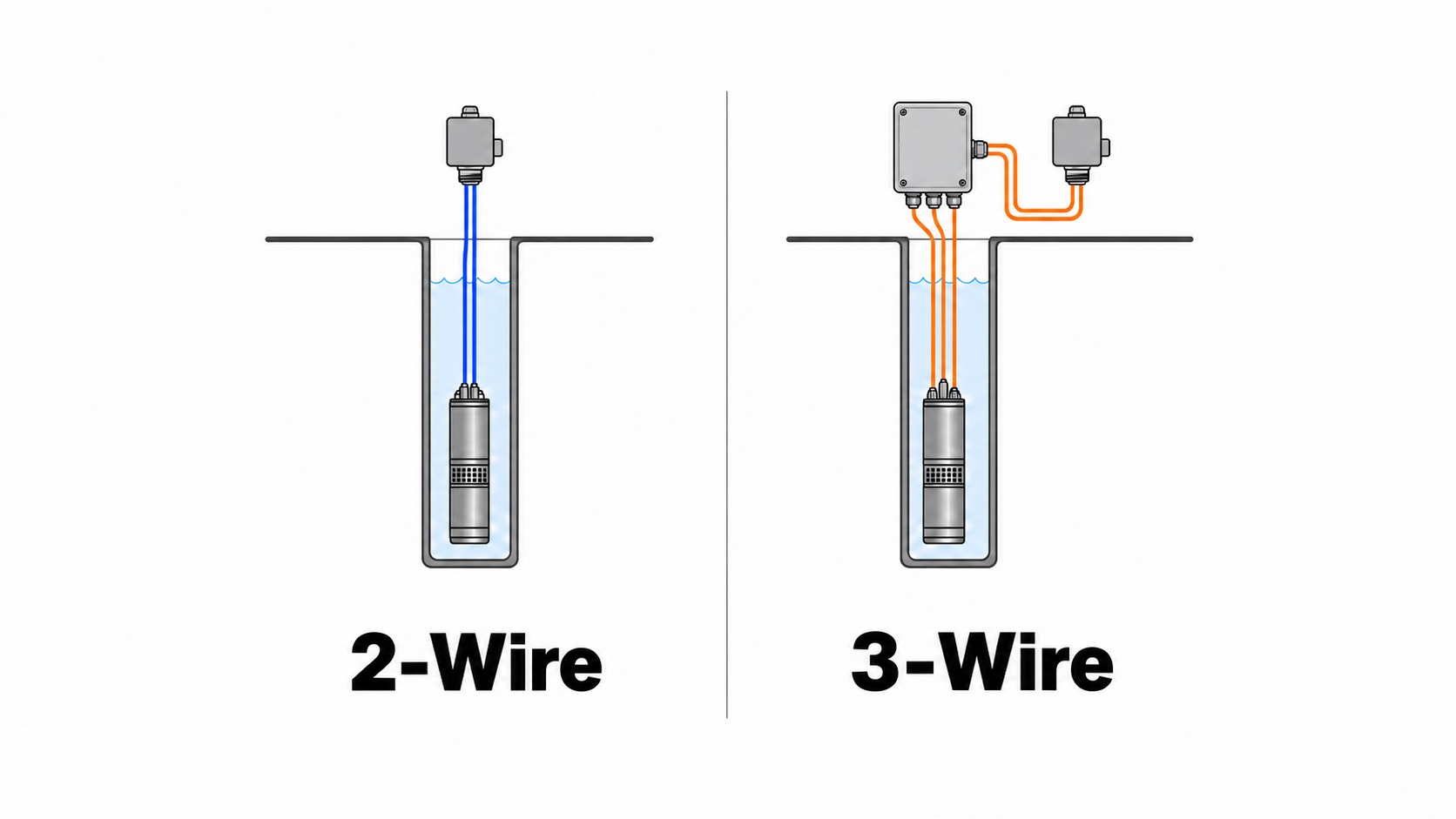
    Submersible well pumps come in two main electrical configurations: two-wire and three-wire systems. Both move water the same way, but they differ in how the motor is started, controlled, and repaired.
    Two-Wire Submersible Pumps

    A two-wire pump has all the starting components built directly inside the motor, deep in the well. It connects directly to the pressure switch without requiring an external control box.

    ProsCons
    Lower installation costIf electrical components fail, the pump must be removed
    Fewer parts above groundHarder to diagnose and repair

    Three-Wire Submersible Pumps

    A three-wire pump moves the starting components (like the capacitor and relay) into a separate well pump control box installed above ground, usually near the pressure tank. When the system calls for water, the box helps start the motor and then switches it to run mode.

    ProsCons
    Easier troubleshooting and repairsHigher upfront cost
    Electrical parts last longerMore components to install and maintain

    Which One Should You Choose? 

    The choice usually comes down to budget versus serviceability:

    • Two-wire systems are simpler and more cost-effective upfront
    • Three-wire systems are easier and cheaper to repair long-term

    For higher-horsepower systems, choose a three-wire setup because it offers better control and makes maintenance easier.
    Related Articles

    • Well pump service cost
      Well Pump Repair, Replacement & Installation Costs in Ontario

      No water? Find out exactly what well pump repair or replacement costs in Ontario before you call a contractor.
      Read more
    • well pump technician
      Well Pump Not Working? Here’s Why and What You Can Do

      Troubleshoot your well pump problem and know exactly when to call a pro.

      Read more
    • essential water tests_new well
      Quick Plumbing Fixes—7 Essential Water Tests Every New Well Needs

      Learn about the 7 essential water tests you should conduct immediately after installing a new well to ensure safe and clean water for your home.


      Read more

    Your Questions, Answered

    How does a well pump system work?

    A well pump system works by pulling water from underground and delivering it to your home under pressure, typically between 30 and 60 PSI. A pressure tank and a pressure switch work together with the pump. The pump fills the tank with pressurized water. When you open a faucet, the air in the tank pushes the water to your sink.

    How does a submersible well pump work?

    A submersible well pump sits underwater at the bottom of the well and pushes water up to the surface rather than pulling it. Since it is fully submerged, it does not require priming. An electric motor drives impellers that force water through the pipe and into the home’s plumbing system.

    How does a deep well jet pump work?

    A deep well jet pump is installed above ground and uses a two-pipe system to lift water from deeper wells. It sends pressurized water down one pipe to create a vacuum in the well, and this vacuum uses the Venturi effect to draw water up through the second pipe and into the home.

    How does a well water pump work?

    A well water pump moves water from an underground aquifer into your home’s plumbing system. It draws water through a pipe into a pressure tank, which stores a reserve supply and maintains consistent water pressure at your fixtures without the pump needing to run continuously.

    How does a well pump pressure tank work?

    A well pump pressure tank stores pressurized water, so your pump doesn’t have to switch on every time you open a tap. The tank uses a compressed air cushion above the water to maintain pressure, and the pump only kicks in to refill it once pressure drops below a set threshold.

    How does a deep well pump work?

    A deep well pump uses a submersible motor lowered directly into the well to push water up to the surface. Because the pump is submerged near the water source itself, it can efficiently lift water from depths beyond what a surface-mounted pump could handle through suction alone.

    How does a jet pump well system work?

    A jet pump well system uses a surface-mounted pump combined with a venturi nozzle to create suction that draws water upward. Shallow well versions use a single pipe for wells under about 8 metres, while deep well versions use a second pipe to recirculate water and maintain the pressure needed for greater depths.

    Our Well Pump Service Areas

    Choose your province
    • Ontario
    AjaxBarrieBellevilleBowmanvilleBradfordBramptonBrantfordBrockvilleBurlingtonCambridgeChathamEtobicokeFort ErieGuelphHamiltonInnisfilKingstonKitchenerLondonMarkhamMiltonMississaugaNewmarketNiagara FallsNorth YorkOakvilleOrangevilleOshawaOttawaPickeringQuinte WestRichmond HillScarboroughSt. CatharinesSt. ThomasVaughanWaterlooWellandWhitbyWhitchurch-StouffvilleWindsorWoodstock
    See all cities
    Pump Service Areas
    Author:
    Rate this post:
    Average rating: 0/5
    Total votes: 0
    Share:
    Superior Plumbing & Heating

    Hvac or Plumbing emergency? One call - we handle it!

    Same-day service across Ontario & Quebec. Licensed & insured

    (866) 932-2818
    info@superiorplumbing.ca
    About company
    • About Us
    • Reviews
    • Contact Us
    • Careers
    • Our offices
    Customer service
    • Terms and conditions of use
    • Warranty, Returns and Cancellations
    • Delivery
    • Privacy policy
    All services
    • Drain & Sewer Service
    • Plumbing services
    • HVAC Repair
    • Air Conditioner Repair
    • HVAC and Water Service
    • Plumbing Rebates
    • Boiler Repair
    • Whole-House Repiping Service
    pay for the plumbing service in  by visa
    pay for the plumbing service in  by mastercard
    pay for the plumbing service in  by american express
    pay for the plumbing service in  by wsib
    pay for the plumbing service in  by SSl
    CMMTQ
    Member of CMMTQ RBQ No: 5876-1974-01 - QuebecTSSA License No: 000394817 - Ontario
    © Superior Plumbing & Heating 2005-2026, All rights reserved. DMCA.com Protection Status
    Get a plumber now
    Thank You Thank you for choosing Superior Plumbing.
    We will contact you. Shortly.
    We're sorry Something went wrong.
    Book Now