Have you heard of geothermal heating, but don’t understand how it works?
Unlike a furnace, which generates heat by burning fuel, a geothermal heat pump simply moves heat between your home and the ground.
Let’s take a closer look at how a geothermal system works and what happens during both the heating and cooling cycles.
How Geothermal Heating Works in Winter
During the winter, a geothermal system extracts heat from the ground to warm your home. A mixture of water and antifreeze circulates through the buried ground loop, where it absorbs the earth’s stable underground heat, typically around 2°C to 8°C.
The warmed fluid then flows back to the indoor geothermal unit, where the heat is transferred to the refrigerant. The system raises the temperature and distributes heat throughout your home via ductwork or a radiant floor heating system.
The key point here is that the system isn’t generating heat by burning anything. It collects heat already in the soil and concentrates it for use in your home. That’s why geothermal heating uses so much less energy than a furnace: it moves heat rather than creates it.
But what happens when outdoor temperatures drop to -30°C? Unlike an air-source heat pump, a geothermal system doesn’t rely on the outside air for heat. Instead, it draws heat from the ground, where temperatures remain relatively stable below the frost line. As a result, it continues to provide reliable, efficient heating even during the coldest Canadian winters.
How Geothermal Cooling Works in Summer
During the summer, the process works in reverse. Instead of collecting heat from the ground, the geothermal system removes it from your home and transfers it underground. Because the ground remains much cooler than the outdoor air, it acts as a natural heat sink, allowing the system to cool your home efficiently even on the hottest days.The key to this process is the reversing valve inside the heat pump. It changes the direction of the refrigerant flow, allowing the same system to switch between heating in winter and cooling in summer without any additional equipment.
In cooling mode, the heat removed from your home isn’t wasted — it is transferred into the ground through the buried loop.
What Is a Ground Loop and Why Is It Important?
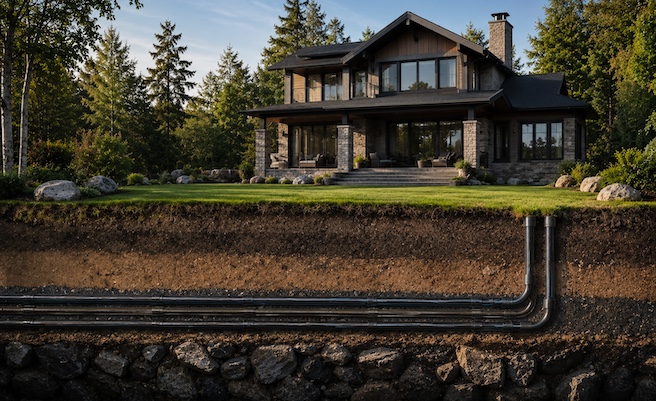
The ground loop is the underground piping system that connects your geothermal heat pump to the earth. Ground loops are made from high-density polyethylene (HDPE) pipe, the same material used in municipal water mains. It’s flexible, corrosion-resistant, and can last up to 50 years or more underground without degradation.
Although outdoor temperatures in Canada can vary from -30°C in winter to over 30°C in summer, the temperature below the frost line stays relatively stable throughout the year. In most parts of Ontario, the ground remains at approximately 2°C to 8°C. This stable underground temperature is what makes geothermal systems so efficient.
There are several types of loops:
Horizontal loop. Common on rural Ontario properties, this system uses pipes installed in trenches about 1.5 to 2 metres deep and spread across a large area of the yard. It is usually the most affordable option when enough open land is available, typically requiring 500 to 1,000 square metres of space.
Vertical loop. Designed for properties with limited space, this system uses pipes installed in drilled boreholes around 50 to 150 metres deep. It requires much less surface area and is commonly used in urban and suburban areas where land is limited.
Pond or lake loop. If a suitable body of water is available, the ground loop can be placed at the bottom of a pond or lake. Since water temperatures remain stable, this option can be highly efficient and cost-effective when site conditions allow.
All three configurations are closed-loop systems, meaning the heat-transfer fluid stays sealed inside the pipes and never comes into contact with the surrounding soil or groundwater. There is also an open-loop system that uses groundwater directly as the heat-transfer medium. While open-loop systems can be highly efficient, they require suitable water quality, reliable flow rates, and approval based on local regulations.
How Does A Geothermal Heat Pump Work?
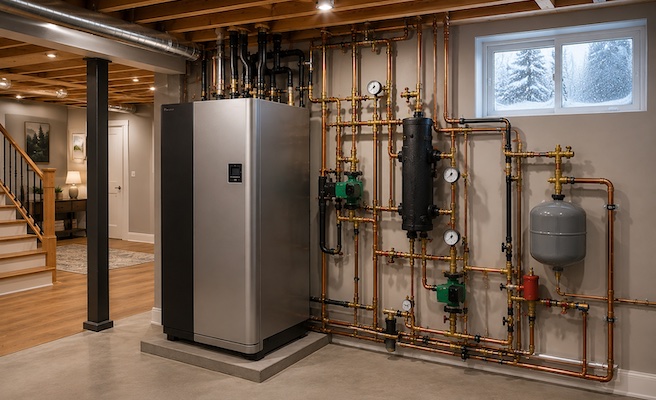
The ground loop delivers heat energy to the indoor heat pump unit, which concentrates it and delivers it to your living space. But how does a geothermal system work?
Step 1. Fluid returns from the ground loop The fluid travelling through the ground loop returns to your home carrying the heat it collected from the earth
Step 2. Heat transfers to the refrigerant Inside the geothermal unit, the warm fluid passes through a heat exchanger called the evaporator. Here, the heat moves into the refrigerant, causing it to boil and change from a liquid into a gas. The ground-loop fluid then heads back outside to collect more heat from the earth.
Step 3. The compressor raises the temperature The refrigerant gas then enters the compressor, which compresses it and raises its temperature. This is the part of the process that uses electricity, but the system is not creating heat from nothing—it is simply increasing the temperature of heat that was already collected from the ground.
Step 4. Heat is delivered to your home The hot refrigerant travels through another heat exchanger, where it releases its heat into your home. Depending on your setup, this heat can warm the air moving through your vents or heat water used for radiant floor systems.After releasing its heat, the refrigerant cools back into a liquid. It passes through an expansion valve, which lowers its temperature and prepares it to absorb more heat from the ground. Then the whole process starts again.
Everything you need to know about geothermal heating and cooling in Canada — costs, incentives, installation, and whether it makes sense for your home.
How does geothermal heating work when it’s -30°C outside?
Geothermal heating works in -30°C weather by extracting heat from the ground, not the outdoor air. The temperature underground remains relatively stable year-round, allowing the ground loop to collect heat even during extreme cold.
How does geothermal cooling work differently from a regular air conditioner?
Geothermal cooling works differently from a regular air conditioner because it releases heat into the cooler ground instead of hot outdoor air.
Does the ground loop freeze in winter?
A geothermal ground loop does not normally freeze in winter because it uses a heat transfer fluid designed for cold temperatures.
How long does the ground loop last?
A geothermal ground loop typically lasts 50 years or more with proper installation and maintenance. The underground piping is made from durable materials such as high-density polyethylene (HDPE), which is designed to withstand decades of temperature changes and soil conditions.
Does geothermal work with existing ductwork?
Geothermal systems can work with existing ductwork if the duct system is properly sized and in good condition.
Where do we provide geothermal heat pump services?