Septic Drain Field (Leach Field) — How It Works, How to Design It & Why It Fails
If your property isn’t connected to municipal sewers, your septic drain field (often called a leach field) is the most important part of your property’s plumbing system. It’s where your household wastewater undergoes its final treatment before safely filtering back into the soil.
But how does it work, what should you consider before designing it, and what causes it to stop working properly?
What a Drain Field Is and How It Works
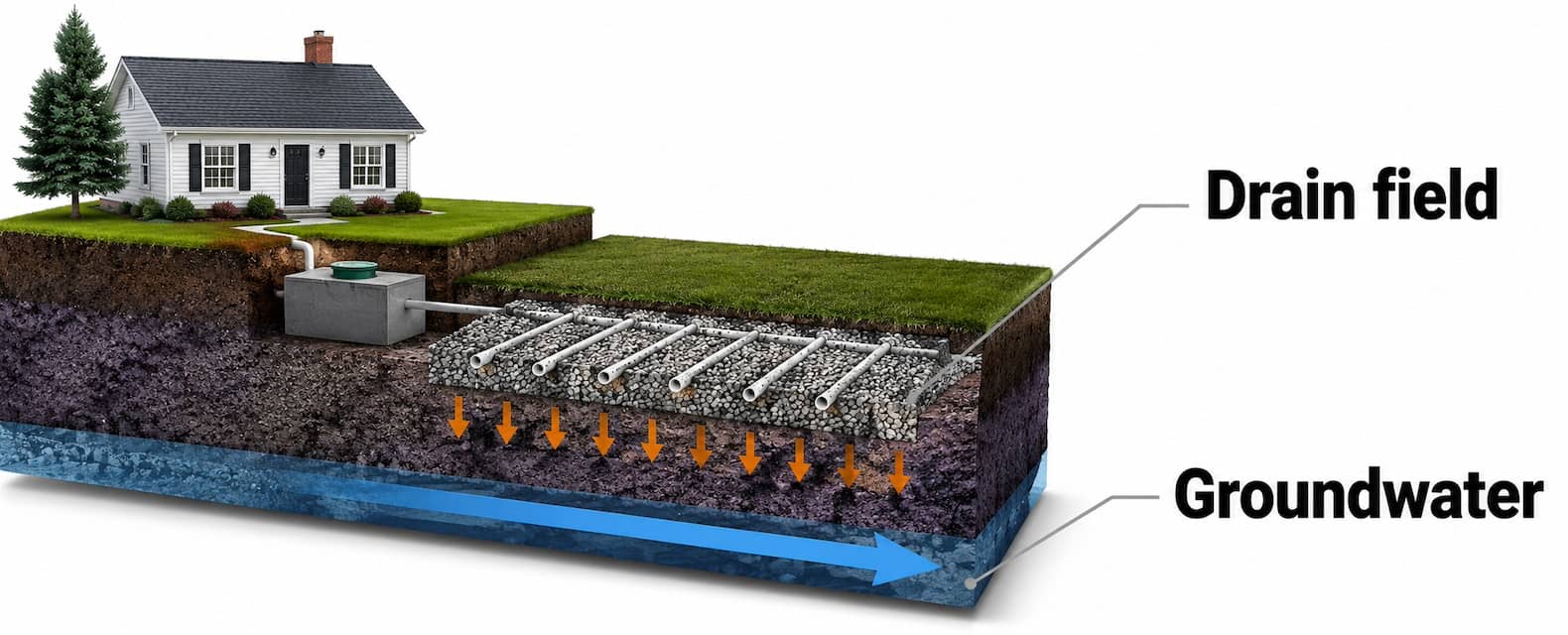
A septic drain field (often called a leach field or drain field is a network of perforated pipes installed in shallow, underground trenches or beds. It acts as the final stage of the wastewater treatment process. This is how a leach field works:
1. Primary treatment: Wastewater leaves your house and enters the septic tank. Here, heavy solids sink to the bottom (sludge), and light grease floats to the top (scum), effectively separating the waste.
2. Distribution: The partially clarified liquid, known as effluent, flows out of the tank and into the network of perforated pipes installed in the drain field.
3. Biological treatment: As the effluent trickles out of the pipe perforations into the surrounding gravel or stone, soil bacteria begin to break down the organic matter.As shown in the image above, this biological breakdown happens as the effluent moves downward through the soil profile.
4. Natural filtration: As the water moves deeper into the unsaturated soil, it undergoes further filtration. By the time it reaches the water table, the liquid is treated and clean, where it eventually enters the groundwater system to continue its natural path.
For a drain field to work properly, the soil conditions are critical since the system can only function if the soil beneath it can absorb and naturally treat wastewater at the same rate at which your household produces it. If the soil drains too quickly, such as pure sand or gravel, wastewater can pass through before receiving adequate treatment. If it drains too slowly, as with heavy clay or compacted till, the trenches become saturated, causing wastewater to surface or back up into the house.
Inside a Drain Field: Design, Layout, and How To Avoid Common Planning Mistakes
Good drain field design in Ontario is governed by strict regulations under the Ontario Building Code (OBC), specifically regarding soil percolation rates (how fast the ground absorbs water) and separation distances from wells and water bodies.
The Key Parts of a Drain Field
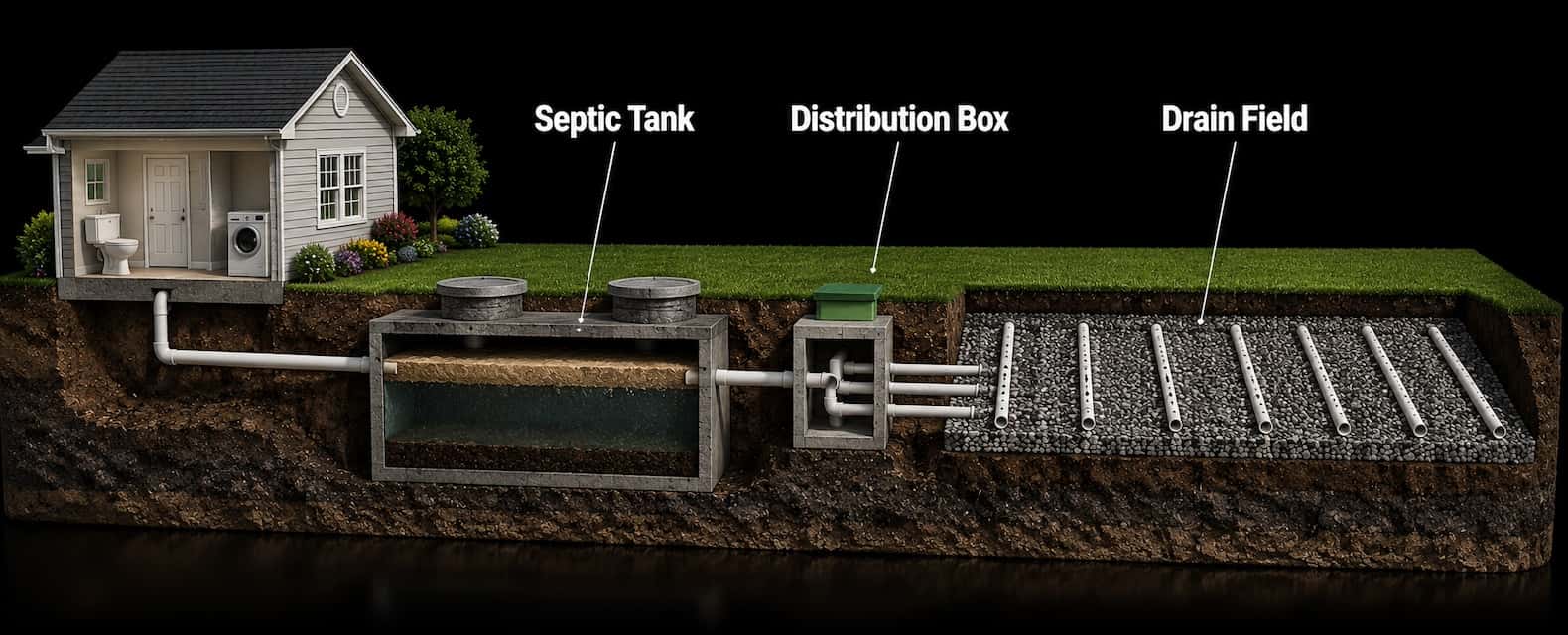
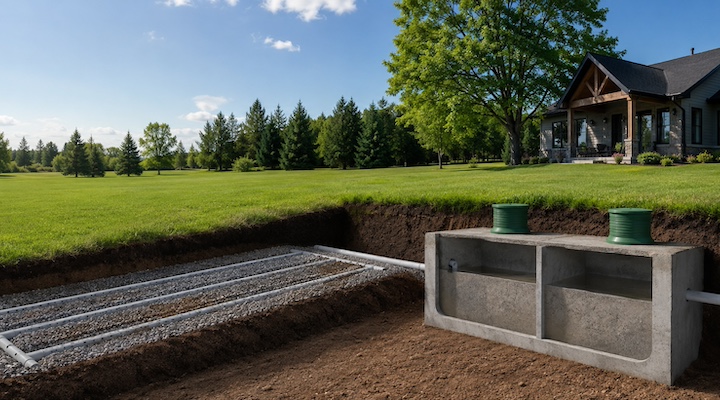
As shown in the image above, there are core components that work together to ensure the system functions properly:
Distribution box: This component directs effluent from the septic tank and distributes it evenly among the drain field pipes. If it is not level, some trenches can become overloaded while others receive too little flow.
Perforated pipes and trenches: These pipes allow wastewater to seep gradually into the surrounding material. Proper trench design maximizes absorption and prevents oversaturation.
Gravel or infiltrator chambers: Clean gravel or modern plastic chambers create space for drainage and provide a large surface area for beneficial microbes.
Soil absorption area: The soil acts as the final filter, where microbes break down contaminants and soil particles help remove nutrients. Proper soil conditions are essential for effective treatment.
How to Design a Septic Drain Field
1. Start with soil testing. A professional site evaluation, including a T-time test, measures how quickly water moves through the soil and determines the appropriate system type and drain field size.
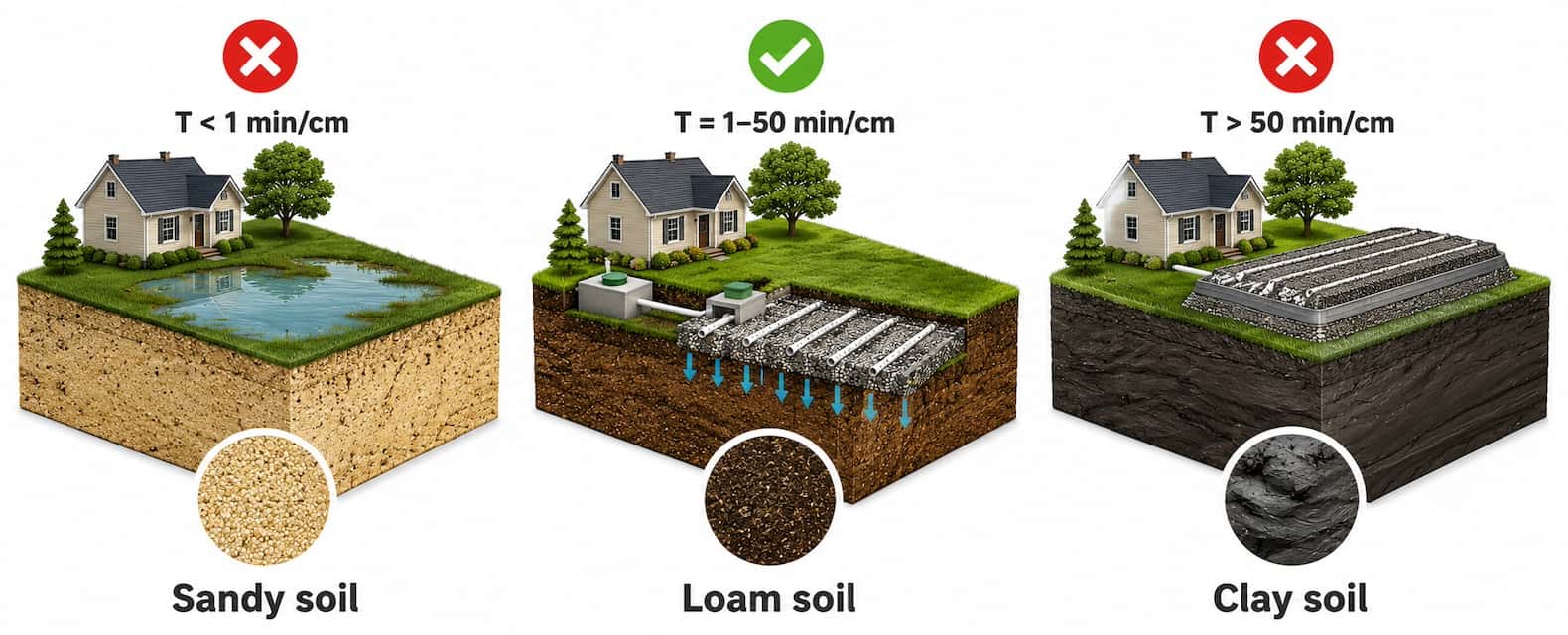
How to Understand Perc Test Results? The ideal percolation rate for a conventional leach field is typically expressed as a T-time range of 1–50 min/cm, and the result plays a major role in determining what type of system your property can support.
T < 1 min/cm (too fast): In very coarse sand or gravel, effluent may move through the soil too quickly for proper treatment, increasing the risk of groundwater contamination.
T = 1–50 min/cm (good range): This is the sweet spot for standard Ontario conventional trench systems, providing balanced absorption and effective biological treatment.
T > 50 min/cm (too slow): Heavy clay soils absorb moisture too slowly, which can lead to trench failure and may require engineered solutions such as raised filter beds or alternative systems.
A standard perc test usually costs between $300–$1,200, depending on your location and the number of test holes required.
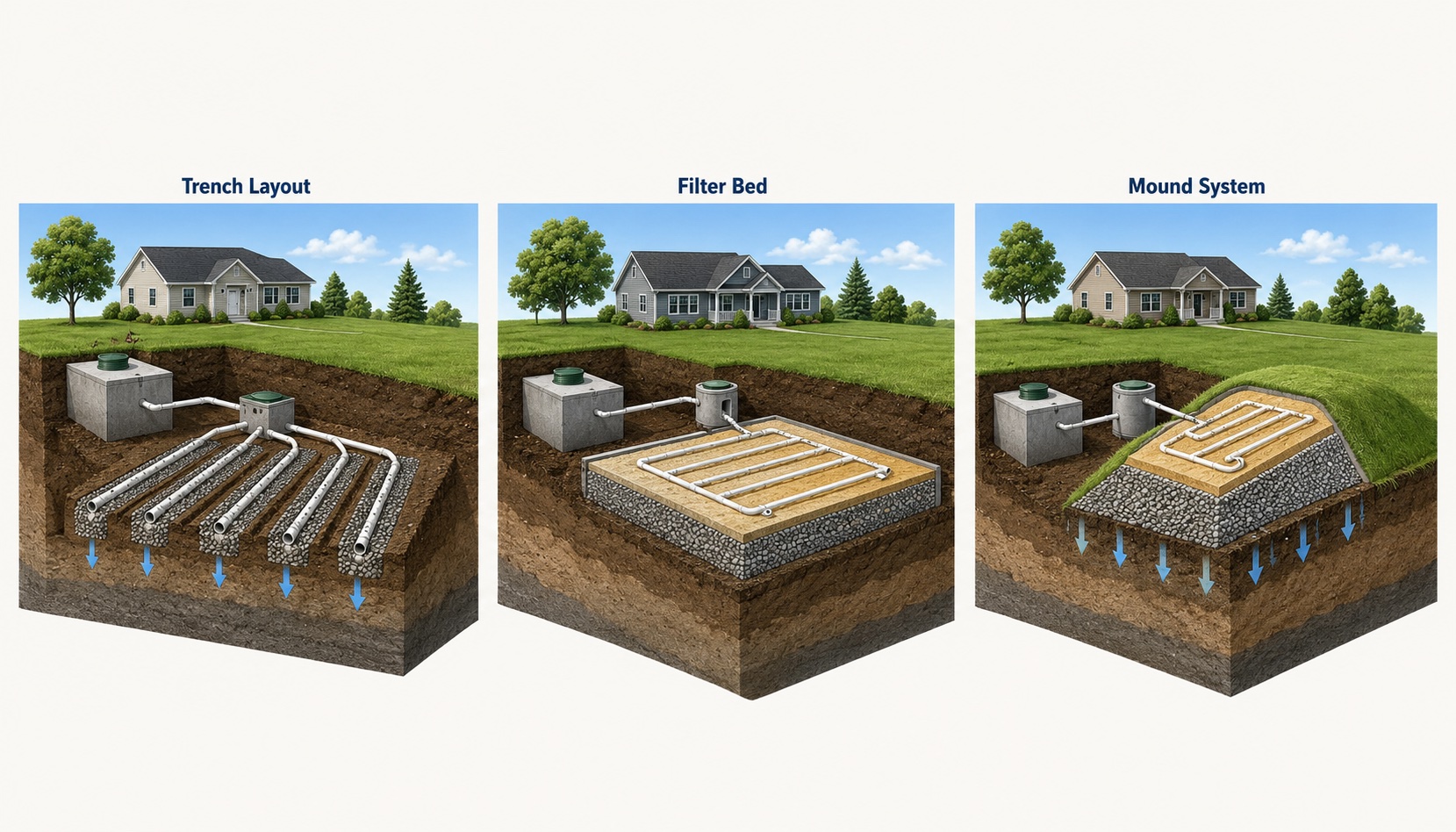
2. Septic drain field layout. A proper layout depends on careful site analysis, accurate calculations, and a clear understanding of local regulations. Trench layout (several parallel rows of pipes in separate shallow trenches) is best suited for larger lots with good soil and natural slope.
Filter bed (a large single excavation filled with specialized sand and stone) is best suited for smaller lots or properties with tight boundaries.
Mound system (an elevated engineered bed of sand built above the natural grade) is best suited for high water tables, shallow bedrock, or heavy clay soil
3. Calculate the right size. While a standard drain field is sized based on the number of bedrooms, a licensed designer calculates a “Daily Design Flow” (DDF) to determine the exact length and size of your system. A field that is too small can fail prematurely, while an oversized system adds unnecessary cost.
4. Account for slope. The layout must maintain a gentle, consistent slope from the septic tank to the distribution box to ensure proper flow and prevent pooling.
5. Follow setback requirements. Minimum setback distances are defined under the Ontario Building Code but may vary depending on system type, soil conditions, and local municipal requirements.
Object
Typical Minimum Setback
Drilled well (on same property)
15 metres
Drilled well (on adjacent property)
15 metres
Dug well
30 metres
Lake, river, or stream
30 metres (minimum; can be greater)
Property line
3 metres
Foundation wall
3 metres
Water service line
3 metres
Local health units or municipal authorities may have stricter requirements. Always consult your specific site plan and local health department.
What Influences Drain Field Design
Several factors affect the design of septic systems in Ontario. Let’s take a closer look at each: 1. Daily wastewater load. In Ontario, septic systems are usually sized based on the number of bedrooms in a home. Getting this calculation right helps ensure the drain field can handle your household’s wastewater without becoming overloaded.
2. Site-specific soil characteristics. Sandy soils allow water to move quickly, while heavy clay soils drain much more slowly and may require a larger field or design modifications.
3. Climate and frost protection. Ontario winters can be tough, so shallow or raised systems must be designed to prevent wastewater from freezing, which can lead to cracked pipes or backups.
4. Local regulations. To install a septic system, you need to go through the permit process with your local Building Department or Public Health Unit (the specific authority varies by municipality).
5. Future accessibility. Good design also considers future maintenance, making sure pumping trucks can easily access the tank when service is needed.
6. Vegetation management. It’s best to keep the drain field away from large, mature trees, since their roots can grow into pipes and cause costly damage.
To ensure it meets your needs and follows standards, work with a qualified professional. Proper installation and regular maintenance will help your system last longer and keep your household safe from wastewater hazards.
What Common Planning Mistakes You Should Avoid
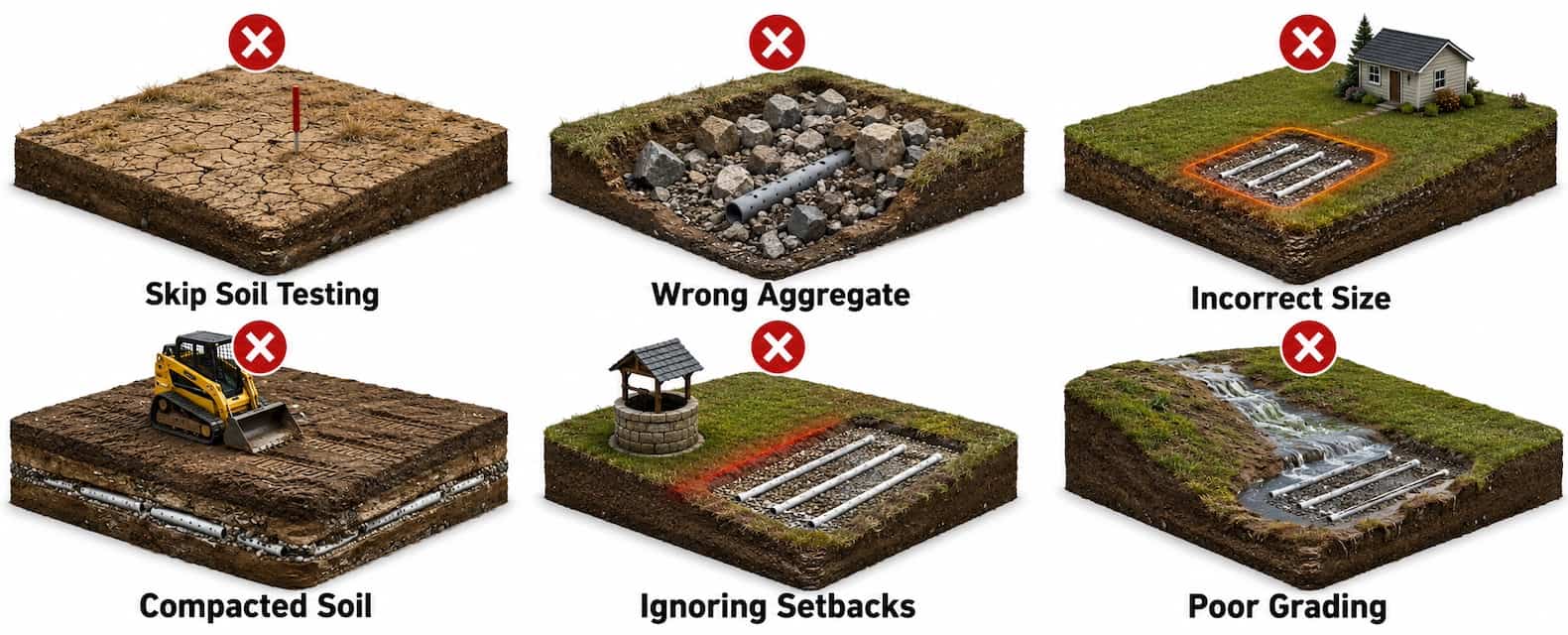
A properly designed drain field can last for decades, but a few common mistakes can lead to costly repairs or even complete system failure. 1. Don’t skip soil testing. Guessing the soil type rarely works out. A proper T-time test is needed to design the system correctly from the start.
2. Use the right aggregate: The wrong stone or gravel can prevent proper drainage and lead to early system clogging.
3. Size it properly. The system needs to match your home’s daily wastewater flow, not just the number of bathrooms.
4. Don’t overlook compaction. Heavy vehicles or equipment can crush pipes and compact the soil, reducing how well the field absorbs water.
5. Don’t ignore setbacks. Missing required distances from wells, property lines, or water sources can lead to failed inspections and costly changes.
6. Ensure proper slope and level: Everything from the piping slope to the D-box must be installed perfectly level or at the correct grade to ensure even distribution.
Preventing these mistakes early on can keep your septic system efficient and extend the drain field’s life.
Septic Bed vs. Leach Field vs. Leach Lines: What’s the Difference?
If you’ve talked to more than one contractor about your system, you’ve probably heard several different terms used for the same thing. Here’s what they all mean:
Septic bed and septic field generally refer to the same thing. In older rural Ontario usage and some municipal documents, “septic bed” is more common, but it describes the same soil absorption area used in modern systems.
Leach field and drain field are commonly used interchangeably in everyday and industry language, although “drain field” is the preferred term in Ontario technical documentation.
Leach line or leach pipe refers to a single perforated pipe within the system. Each trench contains one leach line, and multiple trenches together make up the full drain field. These are typically supplied evenly through a distribution box (D-box).
Drainfield (one word) is mainly used in American technical literature. In Ontario, the preferred term is “drain field” (two words), although both refer to the same system.
For the purposes of permits, inspections, and conversations with Ontario contractors and health unit staff, “leach field,” “drain field,” and “septic bed” will all be understood without any confusion.
Signs of Drain Field Failure
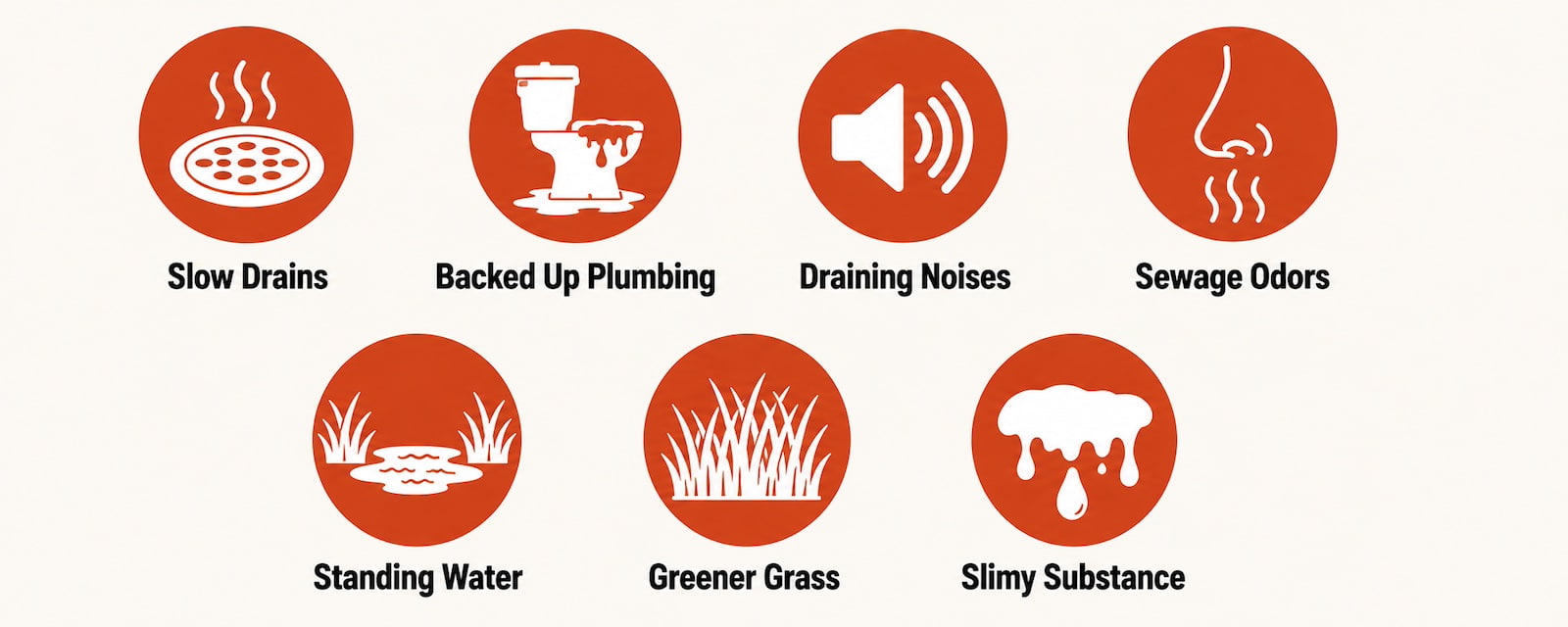
Because your septic field is buried, you cannot see it working. However, the system will usually “tell” you when it is struggling. If you notice these signs, contact a professional immediately.
Soggy lawn/pooling water. If there’s standing water, soggy soil, or unusually lush green patches directly above where your leach field runs, it means the soil can no longer absorb effluent.
Foul odours. A faint or strong sulphur smell near the drain field area, especially in warm weather, often indicates surfacing effluent or a field under stress.
Slow drains/backups.If drains are slow in multiple fixtures at once and plunging or snaking doesn’t resolve it, the drain field is clogged, causing water to back up into the house.
Lush, dark green grass. Nutrient-rich effluent close to the surface feeds vegetation. If one strip of your lawn is noticeably greener and growing faster than the rest, it may indicate a leak or surface saturation.
If you’re seeing any of the above, the next step is a professional inspection. Early diagnosis can mean the difference between a repair and a full replacement.
A septic drain field works by receiving liquid effluent from the septic tank through perforated pipes and letting it percolate into the soil. As the liquid filters downward, natural soil microbes destroy remaining organic contaminants, viruses, and bacteria before they hit groundwater.
How deep is a septic drain field?
A septic drain field is buried 60 cm to 90 cm (24 to 36 inches) below the surface of your lawn. This shallow depth keeps pipes safe from freezing while keeping them high enough in the soil profile to access oxygen-rich, waste-eating microbes.
Can a septic drain field freeze?
Yes, a septic drain field can freeze during periods of extreme sub-zero temperatures if there is no snow cover to insulate the ground. The most common causes are uninsulated lines, a lack of regular warm wastewater flow, or a leaking fixture.
Can I drive over my septic drain field?
No, you cannot drive over your septic drain field because vehicles will crush the buried PVC lines and compact the soil. Compacting the soil cuts off the oxygen supply required by the waste-eating bacteria, leading to a complete system failure.
What’s the difference between a leach field and a drain field?
There is no difference between a leach field and a drain field. Both terms refer to the same soil absorption system, also commonly called a septic bed or septic field in Ontario.
How long does a drain field last?
A drain field typically lasts 20 to 40+ years when properly maintained. Regular septic tank pumping every 3 to 5 years is critical to prevent solids from entering and clogging the system.
Can a drain field be repaired?
A drain field can sometimes be partially restored, but most failures require replacement. Minor issues may be corrected by resting sections of the field, while biomat clogging usually indicates permanent damage.