
Most of the winter emergency calls we take don’t really start in January. The furnace that won’t ignite, the pipe that freezes inside a garage wall, the outdoor faucet that splits overnight: in almost every case, the problem was already there in October. It was just waiting for the first hard freeze.
That’s why we launched our 2026 Winterization Campaign. Below is the same checklist our technicians use in Ontario homes every fall. We’ve split it into what you can safely do yourself this weekend and where it makes sense to call us.
What does it mean to winterize a house?
Winterizing isn’t just turning the furnace on for the first time. Your home gets through winter on several connected systems. The furnace makes the heat, the ductwork delivers it to each room, and your water lines, outdoor faucets and fixtures have to hold up as the temperature drops. When one of them fails, the others usually feel it. A furnace that shuts down on a -20°C night quickly becomes a frozen-pipe problem too.
“We treat fall as a preparation window. We look at every system you’ll depend on through the winter, find what needs attention and fix it before the cold turns a small issue into an emergency”
Furnace maintenance checklist

Your furnace is about to run for five or six months with almost no rest. Here’s what we recommend checking before it does:
- Test it early. Switch to heat on a cool day in October, not on the first freezing night. Listen for banging, squealing or repeated clicking, and walk through the house to confirm warm air reaches every room.
- Check the thermostat. Replace the batteries and make sure it responds and holds the set temperature.
- Clear the area around the furnace. Keep boxes, paint, gasoline and cleaning products well away from the unit.
- Check vents and returns. Furniture, rugs and curtains over vents are some of the most common airflow problems we find.
- Check the outdoor vent pipes. If you have a high-efficiency furnace, it vents through two plastic pipes on the side of the house. Make sure nothing is blocking them, and keep them clear of snow all winter. A blocked intake or exhaust pipe is one of the top reasons we get “furnace won’t start” calls after a snowfall.
- Turn on your humidifier if your furnace has one, and replace the water panel if it’s crusted with scale.
- Test your carbon monoxide and smoke detectors. Heating season is when a working CO alarm matters most.
- Book a professional furnace inspection. A technician checks the ignition, burners, heat exchanger, venting and safety controls. These are things a homeowner can’t safely assess, and they’re where the dangerous problems hide.
Signs your furnace needs attention now, not later: a yellow or flickering burner flame, a burning or gas smell that doesn’t go away after the first startup, the furnace turning on and off every few minutes, or heating bills that jumped last winter without a clear reason. If you notice any of these, call us.
Furnace filter change

A clogged filter makes the furnace work harder, raises your gas bill and can cause the system to overheat and shut itself off. Check it at the start of the season and plan to replace it every one to three months, depending on the filter type, pets and household dust. Our rule of thumb: if you can’t remember the last time you changed it, change it today.
Check the ductwork, not just the furnace
A furnace is only as good as the system that carries its heat. In many Ontario homes, especially those built before the 1980s, the furnace has been replaced at least once while the original ductwork, vents and return-air system stayed behind the walls for decades. Leaky joints, disconnected runs and blocked returns can leave rooms cold no matter how new the furnace is. They also mean you’re paying to heat the inside of your walls.
That’s why this fall our $240 Furnace + A/C Maintenance includes an inspection of accessible ductwork, supply vents and return-air points. We look for anything visible that could restrict airflow over the winter.
“Replacing a furnace doesn’t replace the ductwork behind the walls. In an older home, we want to know that the entire heating system is ready for winter, not just that the furnace turns on.”
Is your furnace heating every floor?
In bungalows, side-splits and other multi-level homes, many of them built in the 1950s and 1960s, comfort isn’t only about whether the furnace works. It’s about whether the heat is shared properly between levels. A warm basement with cold upstairs bedrooms is one of the most common winter complaints we hear.
So this fall, every Furnace + A/C Maintenance visit also includes our Winter Heat Balance Check. We compare heating performance and airflow across the accessible levels of your home and tell you exactly where the heat is going.
“If the basement is hot and the bedrooms are cold, turning up the thermostat isn’t necessarily the answer. We want to know why the heat isn’t balancing across the home.”
How to winterize outdoor faucets and hose bibs
Outdoor faucets cause more of the freeze damage we repair than almost anything else. Water left in the line freezes, expands and cracks the pipe inside the wall. Often nobody knows until spring, when the tap gets turned on and water runs into the basement.
Here’s how to winterize an outdoor faucet in about ten minutes:
- Disconnect the garden hose. Even frost-free hose bibs can’t drain properly with a hose attached.
- Find the interior shut-off valve for the outdoor line. It’s usually in the basement near the exterior wall. Close it.
- Open the outdoor faucet to let the remaining water drain, and leave it open for the winter.
- Add an insulated faucet cover for extra protection on exposed or north-facing walls.
If you can’t find an interior shut-off, the valve won’t turn, or the outdoor faucet still drips after the valve is closed, call us before the freeze. It’s a quick fix in October and an expensive one in January.
How to prevent frozen pipes
The pipes most at risk run through unheated or poorly insulated spaces: garages, crawl spaces, attics and exterior walls, especially under kitchen and bathroom sinks.
- Insulate exposed pipes with foam pipe sleeves in unheated areas. They’re inexpensive at any hardware store.
- Seal drafts where pipes pass through exterior walls and rim joists. A small gap letting in -20°C air can freeze a pipe that’s otherwise indoors.
- Open cabinet doors under sinks on exterior walls during cold snaps so warm air can reach the pipes.
- Keep the heat on when you travel. We recommend never letting the indoor temperature drop below about 12°C, and asking someone to check on the house if you’re away for more than a few days.
- Let a faucet drip during extreme cold if a pipe has frozen before.
If a pipe does freeze (you turn on a tap and get a trickle or nothing): leave the tap open, never use an open flame to thaw it, and call us. A frozen pipe that hasn’t burst yet is much cheaper to deal with than one that has.
A pipe that freezes once will usually freeze again. That points to an insulation or routing problem, and our plumbers can fix it permanently instead of leaving you to thaw it every winter. As a trusted frozen & burst pipe repair company, we help homeowners prevent winter pipe damage, repair frozen lines, and restore water flow before small issues turn into major leaks.
Newer homes aren’t immune
It’s easy to assume a newer house is safe from frozen plumbing. In our experience, it isn’t. Many homes built in the last 20 years have water lines running through attached garages or along exterior walls. They also often have outdoor faucets that were never properly shut down for the season.
This fall we’re offering an Exterior Plumbing Winterization Check. We inspect your outdoor faucets, accessible water lines near exterior walls and in the garage, pipe insulation and your main water shut-off. This package usually costs over $2,000, but this fall it’s available for $650, and you get clear recommendations and quotes for any improvements.
“A newer home can still have a water line running through a cold garage or an outdoor faucet that wasn’t properly shut down. Winterization means finding those weak points before the freezing temperatures do.”
Know where your main water shut-off valve is
If a pipe bursts, a single line can release hundreds of litres of water per hour, so every minute counts. Your main shut-off valve is usually in the basement where the water line enters the house, often next to the water meter.
Find it now, make sure it turns, and show everyone in the household where it is. Old valves that haven’t been used in years can seize, and it’s much better to discover that in the fall than while water is spreading across the floor. If yours is stuck or leaks when you turn it, our plumbers can replace it.
Don’t forget the water heater and sump pump

Your water heater works harder in winter because the incoming water is much colder. Flushing sediment from the tank helps it heat faster, run more efficiently and last longer. While you’re there, check the floor around the tank for moisture. A small drip in the fall is often a failed tank by February. If your water heater is over 10 to 12 years old, a professional water heater repair service can help check its condition and prepare it for the colder months ahead.
Before winter arrives, test your sump pump by slowly pouring a bucket of water into the pit to make sure it switches on and drains the pit completely. Then check the discharge line outside: if it freezes or is blocked by snow, the pump has nowhere to send the water. Spring thaw puts the most pressure on your sump pump, making fall the ideal time to schedule sump pump repair and ensure your system is ready for heavy water flow.
2026 Winterization Campaign: this fall’s offers
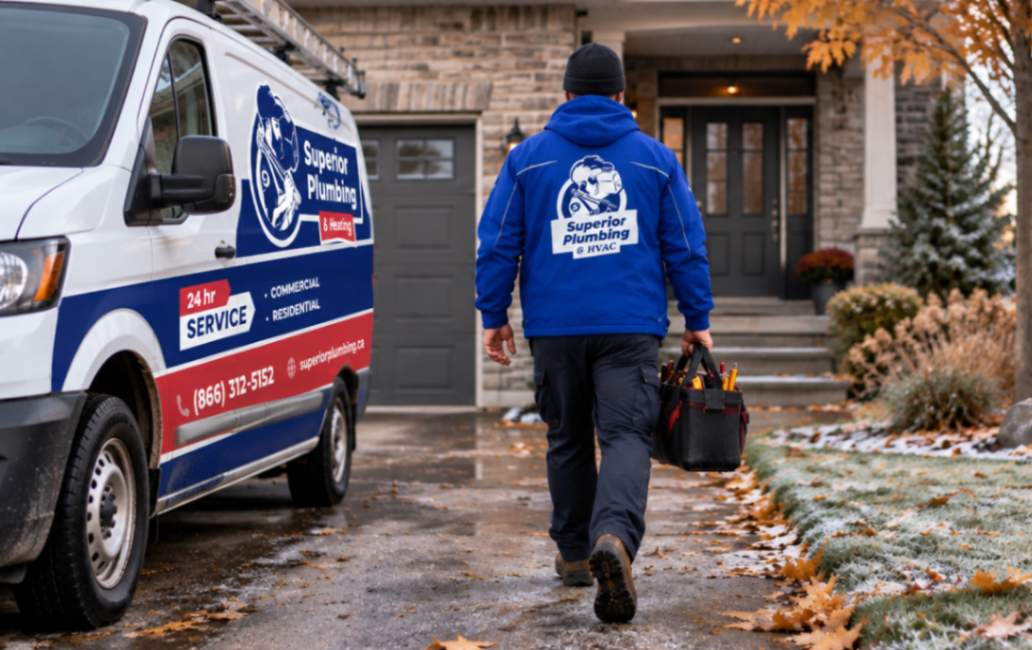
Through the campaign, we’re offering dedicated HVAC and plumbing winterization services across all of our Ontario service locations. This fall you can book our Furnace + A/C Maintenance service for $240, which includes an inspection of accessible ductwork, supply vents and return-air points, plus a Winter Heat Balance Check across the levels of your home to help prepare your heating system for the colder months ahead.
Why book now: in December and January every heating company in Ontario is stretched thin, and wait times for non-emergency visits get long. Booking in the fall means you choose the day and time that suit you, and any problem we find gets fixed before it becomes an emergency.
Schedule your winterization service with Superior Plumbing & Heating today and get your furnace, plumbing and essential home systems ready before temperatures drop. Our experts are available across Ontario to help prevent winter emergencies and keep your home comfortable all season long.